
The Mechanical Engineering Department at Walchand College of Engineering, Sangli, established in 1955, is one of the oldest and most reputed departments of the institute. It offers a B.Tech in Mechanical Engineering with an intake of 60 students, along with three postgraduate programs:
Additionally, B.Tech (30 intake) and M.Tech Design (15 intake) programs for working professionals are offered. The department is recognized as a Research Centre for Ph.D. under Shivaji University, as well as through AICTE QIP and ADF schemes.
The B.Tech program is accredited by NBA till June 2027, marking its fifth accreditation cycle, while the postgraduate programs have also been accredited three times. With around 70% of faculty holding Ph.D.s, the department engages in research across Design, Manufacturing, Thermal, Industrial Engineering, and interdisciplinary domains.
As an autonomous institute, the curriculum is regularly updated per NEP 2020 guidelines to incorporate industry trends, emerging technologies, and outcome-based learning. A dedicated Board of Studies (BoS), comprising faculty, industry experts, alumni, and students, oversees curriculum design.
Students can pursue B.Tech (Honours) in Turbomachinery and Mathematical Applications, or a Minor in CAD/CAM/CIM. To promote flexibility and lifelong learning, students access MOOCs via SWAYAM and earn certifications.
The department has state-of-the-art laboratories, developed as per AICTE guidelines, supporting hands-on training and research. Over ₹2.5 crore in research grants from reputed agencies have bolstered R&D and lab infrastructure. It also offers consultancy services in areas like vibration testing, material analysis, calibration, and CNC machining, generating ₹8–10 lakh annually.
Active student chapters of ASME, SAE, ASHRAE, and ISHRAE conduct workshops and events. Students participate in competitions like M-BAJA, E-BAJA, Efficycle, SUPRA, ACREX, and Go-Kart, showcasing their technical skills.
The Mechanical Engineering Students Association (MESA) organizes co-curricular events, weekly club activities, and an annual state-level symposium VERTEX, promoting leadership, teamwork, and technical excellence.
Through the TIFAC scheme, students and faculty collaborate with MSMEs to offer technical solutions, enhancing industry-academia synergy. The Rajiv Gandhi Science and Technology Commission (RGSTC) supports applied research and innovation within the department.
Postgraduate students undertake dissertation work at reputed companies like DRDO, Dassault Systems, Cummins, HAL, Siemens, Thermax, and others. The department recorded 100% placement of eligible students in 2024–25, with graduates placed in core firms such as Tata Motors, Atlas Copco, L&T, Mahindra, Eaton, Siemens Energy, and software companies like Infosys, TCS, and Cognizant.
Students excel in GATE, GRE, TOEFL, CAT, MPSC, and UPSC, with many admitted to IITs, NITs, IIMs, and top global universities. Alumni hold senior roles in ISRO, DRDO, HAL, L&T, Siemens, Infosys, and others.
In essence, the department offers a balanced blend of theory, practice, and leadership development, preparing students for dynamic roles in engineering, research, and entrepreneurship while contributing meaningfully to society.
The Department of Mechanical Science and Engineering aims to achieve the following objectives:
The Department of Mechanical Engineering is committed to upholding the highest standards of education, research, and professional integrity. Guided by its mission to foster excellence in mechanical engineering and technology.
To be a Mechanical Engineering Program of the first choice by the aspiring students and prospective employers by implementing world class education practices.
To meet the vision, all stakeholders of this programme are committed towards outcome based education philosophy by
The Department of Mechanical Engineering stands out for its key strengths, which include:
Experienced Faculty: A team of highly qualified professors and industry experts specializing in key areas like Design, Thermal, Manufacturing, Industrial Engineering, and CAD/CAM/CAE, offering a strong mix of academic and industry knowledge.
Advanced Laboratories for Specialized Learning: State-of-the-art labs equipped for Design, Thermal, and Manufacturing domains, enabling hands-on learning, simulations, and research.
Industry-Aligned Curriculum: Curriculum regularly updated with the latest technologies and tools such as ANSYS, MATLAB, SolidWorks, and Autodesk, ensuring industry relevance.
Research and Innovation Culture: Active involvement in funded projects, publications, and patents fosters innovation and provides real-world problem-solving opportunities.
Collaborations with Industry Leaders: Strong ties with industries across automotive, aerospace, and manufacturing sectors offer internships, consultancy, and joint research opportunities.
Focused Skill Development Programs: Workshops and training sessions in areas like CAD, FEA, CFD, Additive Manufacturing, and PLM to enhance technical competencies.
Strong Placement Record: Consistent placements in top companies like Tata Motors, Mahindra, Siemens, and John Deere, along with opportunities in automation and renewable energy sectors.
Real-World Problem Solving through Industry Projects : Students work on live, industry-sponsored projects, applying classroom learning to practical engineering challenges.
Dedicated Research Centers for Specialized Fields: Centers focused on Thermal Systems, Product Design, and Advanced Manufacturing support high-level research and industrial collaborations.
Support for Innovation and Entrepreneurship: Incubation centers and innovation clubs encourage start-ups and prototype development areas like sustainable systems and smart manufacturing.
Comprehensive Mentorship for Career Growth: Faculty offer personalized guidance for research, career planning, and industry networking to prepare students for leadership roles.
Commitment to Excellence in Engineering Education: Balanced focus on theory, practical skills, and innovation ensures graduates are industry-ready and socially responsible engineers.
The Department of Mechanical Engineering excels in the following areas of expertise:
Design Engineering: Focus on mechanical systems, machine elements, and innovative product design. Expertise includes FEA (ANSYS, Abaqus), vibration analysis, noise control, and PLM, ensuring reliable and optimized designs.
Thermal Engineering: Strong in heat transfer, thermodynamics, and fluid mechanics, applied to IC engines, power plants, and heat exchangers. Proficient in CFD simulations and sustainable energy systems like solar, wind, and biomass.
Manufacturing Engineering: Specialized in machining, casting, forming, CNC, and Additive Manufacturing. Focus on lean manufacturing, automation, and rapid prototyping to enhance precision and production efficiency.
Industrial Engineering: Expertise in operations and supply chain management, lean systems, quality control, and ergonomics. Emphasis on productivity, safety, and sustainable process optimization.
CAD/CAM/CAE: Advanced training in SolidWorks, AutoCAD, ANSYS, and MATLAB for design, simulation, and manufacturing. Strong in FEA, CFD, and structural analysis for high-quality product development.
Interdisciplinary Fields: Combines robotics, mechatronics, automotive engineering, and materials science. Focus on smart systems, vehicle dynamics, EV technologies, and material optimization for diverse applications.
The Department of Mechanical Engineering at Walchand College of Engineering is distinguished by its commitment to academic excellence, innovation, and industry collaboration. The department stands out for its unique features and strengths:
Well-Equipped Laboratories : Advanced labs in thermal, design, manufacturing, mechatronics, and materials science support hands-on learning and research.
Industry-Oriented Curriculum : Regularly updated to reflect industry trends, with integrated simulations, case-based learning, and real-world applications.
Strong Research and Innovation Culture: Active in core and interdisciplinary research with government and private funding; students contribute to impactful projects.
Focus on Project-Based Learning: Embedded mini and final-year projects, along with innovation challenges, nurture problem-solving and application skills.
Hands-on Software Training: Training in tools like ANSYS, SolidWorks, AutoCAD, MATLAB, and CREO equips students for technical roles in design and analysis.
Regular Industrial Visits and Internships: Strong industry ties provide students with real-world exposure through visits, internships, and practical learning.
Active Student Chapters and Clubs: Clubs like SAE, ISHRAE, ASME, and Robotics promote technical engagement and participation in national competitions.
Excellent Placement Support: High placement rate across core, IT, and interdisciplinary sectors; training includes aptitude, soft skills, and technical prep.
Incubation and Entrepreneurship Support: Support for start-up ideas through incubation facilities and mentoring for aspiring student entrepreneurs.
Alumni Network and Mentoring: A strong alumni base actively guides students in academics, placements, and career development.
Focus on Sustainable and Green Technologies: Research in renewable energy, waste-to-energy, and sustainable design aligns with global environmental goals.
Industry Sponsored Labs and MoUs with Industries: Labs sponsored by companies like Siemens and PIL offer real-time tech exposure; MoUs strengthen academic-industry collaboration.
Industry-Supported Projects and Initiatives: Through RGSTC and other initiatives, students work on live industry problems, gaining hands-on experience and practical skills.
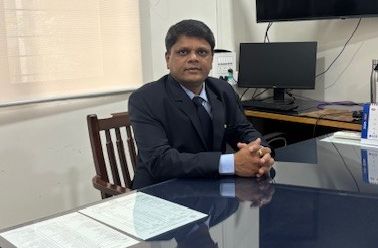
A Warm Welcome to Aspiring Mechanical Engineers
Dr. Sagar U. Sapkal is a distinguished academician, researcher, and academic leader with over twenty-five years of experience in higher technical education. He currently serves as Professor and Head of the Department of Mechanical Engineering at Walchand College of Engineering. Dr. Sapkal earned his B.E. and M.E. in Mechanical Engineering from Walchand College of Engineering, Sangli, and completed his Ph.D. from Jadavpur University. His areas of specialization include Design Engineering, Advanced Manufacturing Systems, Industrial Engineering, Applied Operations Research, Optimization Techniques, and Additive Manufacturing. His research integrates analytical modeling and intelligent optimization approaches to address complex manufacturing and industrial engineering challenges.
An accomplished researcher, Dr. Sapkal has published 50 peer-reviewed journal papers and 48 conference papers at national and international forums. He has also contributed 2 book chapters and holds 6 patents, reflecting his strong orientation toward innovation and applied research. His scholarly impact is evidenced by 531 citations on Google Scholar, with an H-index of 11 and an i-10 index of 13, underscoring the relevance and influence of his research contributions. His work has been recognized with several awards, including the Best Paper Award at the International Conference on Artificial Intelligence and Applications (ICAIA 2011) in Hong Kong, the Meritorious Prize at NAFEMS 2018 in Bengaluru, and the First Prize at IMTEX 2019 Academia Pavilion, Bengaluru.
Dr. Sapkal has an impressive record of research mentorship. He has guided 7 Ph.D. scholars (3 awarded, 1 submitted, and 3 ongoing), 42 M.Tech dissertations, and 32 B.Tech projects. He actively fostered innovation and entrepreneurship among students and served as a Mentor for Incubation initiatives in 3D Printing and Digital Prototyping Solutions, promoting technology-driven product development within the institution. He has also been associated with significant developmental and sponsored projects, including participation in the RGSTC–MSME scheme project and Engineering Design Internship Program, aimed at strengthening industry–institute collaboration and promoting technology transfer. He has actively represented the institution at international platforms, having attended and presented at conferences and seminars in Singapore, Hong Kong, and Austria. He has also served as a Jury Member for the Internal Smart India Hackathon, encouraging innovation, problem-solving, and interdisciplinary teamwork among students.
In his administrative capacity, Dr. Sapkal plays a pivotal role in academic planning, accreditation processes (NAAC/NBA), faculty development, and curriculum enhancement. As Head of the Department, he leads strategic initiatives for academic quality assurance and research promotion. He serves as Chairman of the Board of Studies (BoS) and Department Advisory Board (DAB), and contributes to academic governance through participation in various institutional committees.
He has significantly contributed to infrastructure development, including the establishment of Metrology & Manufacturing Technology Laboratories and the Product Innovation Laboratory. His efforts in strengthening industry interaction include consultancy projects, testing assignments, industrial visits, and MoU-driven academic and industry collaborations. He is a Life Member of ISTE and IIIE, a Life Fellow of IIPE, and a Member of ASME. His career reflects a balanced integration of academic scholarship, research innovation, administrative leadership, and commitment to institutional excellence.