
Laboratories: The department has all types of modern teaching- learning resources in the department.
Data Structure & Programming Lab | A Data Structures & Programming Lab is a structured, practical companion to theory courses. Over 12–14 weeks, students can implement core structures (arrays, lists, trees, graphs) in C/C++ (or Java/Python), Analyse algorithms, develop problem-solving skills, and learn memory management and file I/O. The Programming Laboratory aims to provide students with hands-on experience in software development, problem-solving, and understanding computational logic. It equips learners with practical knowledge of programming languages, tools, and methodologies necessary for modern software development. Resources: 1)Desktop 2) Projector 3) UPS 4)Windows + Ubuntu 5) Programming language Knowledge Creation-
Continuous feedback: Instructors highlight optimizations/improvements during labs to help students internalize best practices. |
Free & Open Source Lab | Free & Open Source Lab,” releasing powerful tools and infrastructure openly. A Free & Open Source Lab refers to a research and development environment that emphasizes open-source tools, collaboration, transparency, and accessibility. This empower anyone to use, customize, and contribute to scientific or AI-driven software and hardware. . Resources: 1) Desktops 2) UPS 3) VScode 4) Ubuntu/Kali/CentOS Knowledge creation in Free & Open Source (FOSS) labs is a richly collaborative, transparent, and continually evolving process. It works as Community-Led Knowledge Sharing & Co‑creation. |
Computer Networking & Web Technology Lab | The Computer Networking & Web Technology Lab blends physical and virtual network experimentation with full-stack web application development. It equips students with practical and theoretical knowledge—from wiring NICs and routing protocols to building dynamic web services—ensuring hands-on competence in both networking and web technologies . This lab empowers students to blend theory with hands-on practice by: Building, configuring, and managing real and virtual network devices (NICs, routers, switches) Setting up network topologies (LAN, WAN) and protocols across OSI/TCP‑IP layers Implementing Data Link and Network layer algorithms (framing, error detection/correction, routing, congestion control) Hosting Web Technologies experiments: HTML/CSS/JavaScript, PHP/MySQL, XML, and server‑side scripting . Resources: 1)Desktop 2) Projector 3) UPS 4) OS 5) NS2,NS3, Cisco packet tracer, Wire shark etc. |
Microprocessor & IOT / Data Science Lab | A Microprocessor & IoT Lab is a specialized educational space designed to provide hands-on experience with microprocessors, microcontrollers, and Internet of Things (IoT) technologies. It serves as a practical environment where students can design, develop, and test embedded systems and IoT applications, bridging theoretical knowledge with real-world implementation. The Data Science Lab is designed to provide students with hands-on experience in analysing and interpreting complex datasets. It serves as a bridge between theoretical knowledge and practical application, enabling students to: · Competence in presenting data insights through visualization Resources: 1) Desktop 2) Projector 3) Printers 5) OS 6) Programing Language 7) IOT kits.8) GNU simulator, Sim 85, Proteus 9) VEKA, R language, Knime etc. Knowledge Creation-
Competence in presenting data insights through visualization.
|
Software Engineering Lab | Software Engineering Lab equips students with practical skills essential for a career in software development, fostering a deep understanding of the complexities involved in building and maintaining software systems. Resources: 1) Desktop 2) Projector 3) Printers 5) OS 6) Programing Language Knowledge Creation-
Software Engineering lab is a multifaceted process that combines individual learning with collaborative efforts. By leveraging tools, methodologies, and industry partnerships, this lab foster an environment where knowledge is continuously generated, shared, and refined. This dynamic process not only enhances students’ technical skills but also prepares them for the complexities of the software industry. |
Project Lab | The Innovation and Project Laboratory is designed to foster creativity, problem-solving, and hands-on experience in building real-world projects. This lab aims to provide students with the tools, resources, and mentorship required to turn innovative ideas into functional prototypes or fully developed projects. The lab focuses on developing interdisciplinary skills, with a strong emphasis on collaborative project-based learning, research, and product development. Resources: 1) Desktop 2) Smartboard 3)OS 4)MS office 5) Programming language etc. Knowledge Creation-
The Project Laboratory offers students an environment where they can take their ideas from concept to prototype, with access to cutting-edge tools, technology, and mentorship. This hands-on experience prepares them for careers in technology development, product design, entrepreneurship, and research. |
PG Research Laboratory
| The PG Research Laboratory is designed to support postgraduate students in conducting advanced research across various fields of technology, engineering, and applied sciences. The lab provides an environment conducive to deep academic exploration, allowing students to engage in both theoretical research and practical experiments. The goal is to foster innovative research, develop new technologies, and contribute to scientific advancements. Resources: 1) Desktop 2) Smartboard 3)OS 4)MS office 5) Programming language etc. Knowledge Creation-
The PG Research Laboratory provides an ideal environment for postgraduate students to deepen their expertise, engage in cutting-edge research, and contribute to advancements in science and technology. It equips students with the tools and experience necessary to pursue successful careers in research, academia, or industry. |
The department has a large number of computers and equipment, including servers, routers, and software tools.
Sr.No. | Name of Hardware | Name of Components |
1 | IOT Kit | · RFID tag · CMOS Camera · Ultrasonic Sensor · Butane Hydrogen Sensor · Ethanol Gas Sensor · Gas Sensor · GSM GPRS sim 900A with Antena · PIR Motion Sensor · IR Proximity Sensor · 16*4 Cahracter LCD Display · LDR Module · Soil Sensor · Water Detector · BMP 280 I2C · Digital Touch Sensor · Temprature Sensor · HC-05 Bluetooth RF · ESP8266 · Snap Power Cable · 5V 4 Chaneel Relay Module · CDMA Trainer Kit · X-Bee Module-Pervicom-WCNADK_EK · Scientech Optical ST2502- |
In the aim of building a center of excellence in immersive technologies the department has invested in the hardware related to AR and VR.
Software: The department has a range of software tools, including programming languages, databases, and operating systems.
Sr.No. | Names of Software |
1 | Windows 10 Pro |
2 | Ubuntu v22 |
Licensed copies / subscription to software
The department has special resources such as :
S.N. | Name of the Laboratory |
1. | Industry Supported Lab AR-VR Lab
|
2. | Collaborations and Partnerships: A) IIT Bombay vLabs |
To achieve above Vision, all stakeholders of this programme are committed to following missions-
The Department of Artificial Intelligence and Machine Learning stands out for its key strengths, which include:
These strengths collectively position the department as a leader in AIML education, research, and innovation.
The Department of Artificial Intelligence and Machine Learning excels in the following areas of expertise:
These areas of expertise enable the department to provide students with advanced knowledge and practical skills, preparing them for leadership roles in the ever-evolving technology landscape.
The Department of Artificial Intelligence and Machine Learning at Walchand College of Engineering stands out for its unique features and strengths, including:
These features collectively position the department as a leader in producing highly skilled, innovative, and socially responsible engineers.
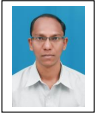
Dr. RATHOD RAVINDRA RAMKISHAN is the Head of the Department of Artificial Intelligence and Machine Learning at Walchand College of Engineering, Sangli. He joined the institution in 2004 and has since made significant contributions to the field of IT, computer science, Artificial Intelligence education and research. Dr. Rathod holds a Ph.D. in Computer Science and Engineering from Indian Institute of Technology Roorkee.. he also earned his M.E.. degrees in Computer Science and Engineering from Walchand College of Engineering and B.E MGM’s College of Engineering, Nanded. Swami Ramanand Teerth Marathwada University, Nanded.
His research interests include Data Mining, GIS, AI, Image Processing and Applications. Dr. Rathod has published numerous papers in national and international journals and conferences. He has also been involved in several sponsored projects. Dr. R.R. Rathod’s published patent stands as a testament to his contribution toward technological innovation and the promotion of research-driven academic excellence.
He has been awarded with Padmashree S.M.Annasaheb Behare “Ideal Teacher Commendable Prize-2009” at Walchand College of Engineering, Sangli.