B. Tech. Curriculum with Minors

B.Tech Curriculum with Minors

Curriculum – The B. Tech curriculum in electrical engineering is designed to provide students with a comprehensive education in electrical engineering.

Curriculum – The B. Tech curriculum in electrical engineering is designed to provide students with a comprehensive education in electrical engineering. In the Academic Year 2024-2025 curriculum of First year and Second Year is implemented as per NEP 2020 policy which includes multidisciplinary minor (MDM) as well. CSE department offers MDM in electrical engineering.
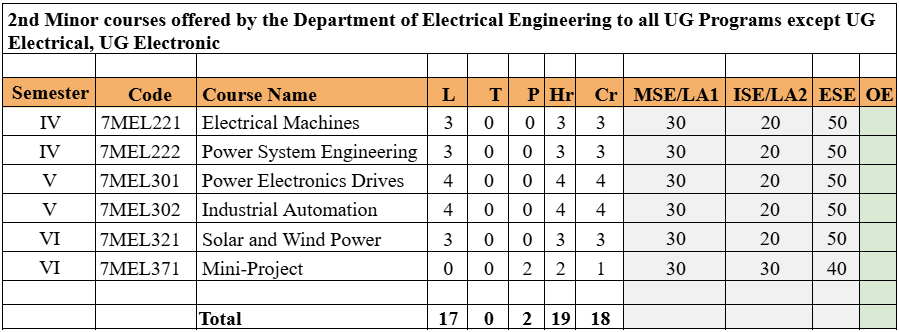
Minors

Program Objective and Outcome

Graduates of UG Programme after completing their graduation in Electrical Engineering will be able to:

Program Outcomes

Program Specific Outcomes

Outcome Based Educational Philosophy

Outcome-Based Education (OBE) focuses on achieving specific outcomes in terms of knowledge, skills, and attitudes that students are expected to demonstrate upon graduation. For a B. Tech in Electrical Engineering, the OBE philosophy aligns with the program’s mission to develop competent engineers capable of solving real-world problems using modern technologies.
  1. Focus on Graduate Attributes:
    OBE emphasizes the development of key attributes such as problem-solving, critical thinking, teamwork, and effective communication, which are essential for computer engineers.
  2. Student-Centered Learning:
    The learning process is tailored to meet the needs and aspirations of the students, ensuring that each learner achieves predefined outcomes.
  3. Clear Definition of Learning Outcomes:
    Learning outcomes are categorized into Program Outcomes (POs), Program Specific Outcomes (PSOs), and Course Outcomes (COs):
    • POs: Define general competencies (e.g., problem analysis, ethical responsibility).
    • PSOs: Focus on domain-specific skills (e.g., Electrical Power System and Machines and Drives).
    • COs: Specify what students will achieve in individual courses.
  4. Alignment across Levels:
    The curriculum, teaching methodologies, and assessment strategies are aligned with achieving the defined outcomes.
  5. Continuous Assessment and Feedback:
    The OBE framework uses tools like rubrics, surveys, and assessments to measure outcomes and provide feedback for continuous improvement.
  6. Preparation for Lifelong Learning:
    Encourages adaptability and lifelong learning to remain relevant in a rapidly evolving field like Electrical Engineering.

Structure

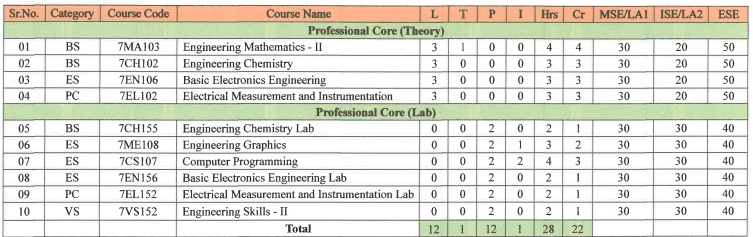
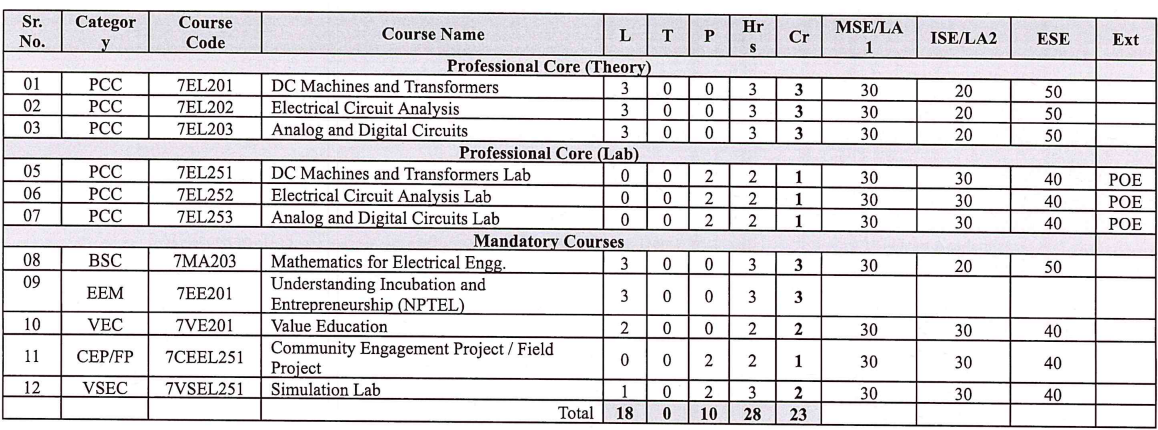
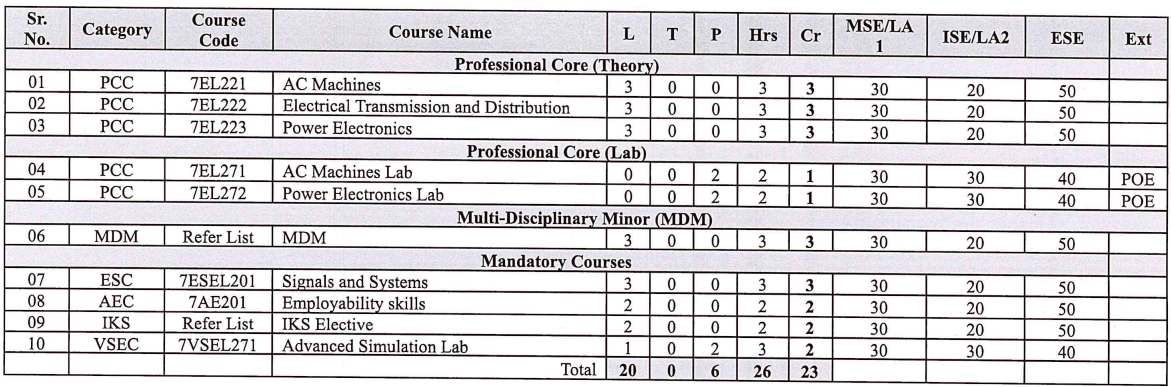
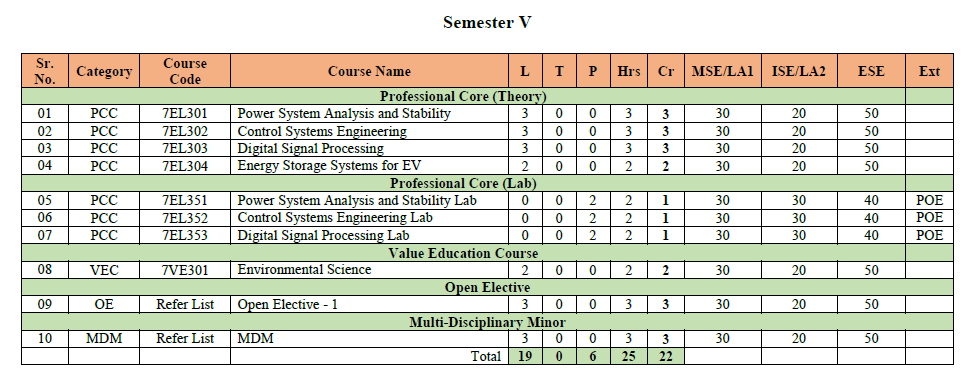
Tabular form of Program Structure (Link to be provided for detailed note)
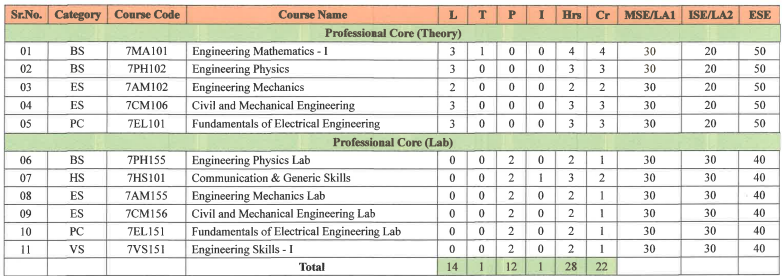
First Year: Sem- I and II A. Y. 2023-24

Second Year Sem-III and IV applicable to Academic year 2024-25 and onwards

TY: Credit System for T. Y. B. Tech. Electrical Engineering Sem- V and VI AY 2023-24

T. Y. B. Tech. (Sem – V)

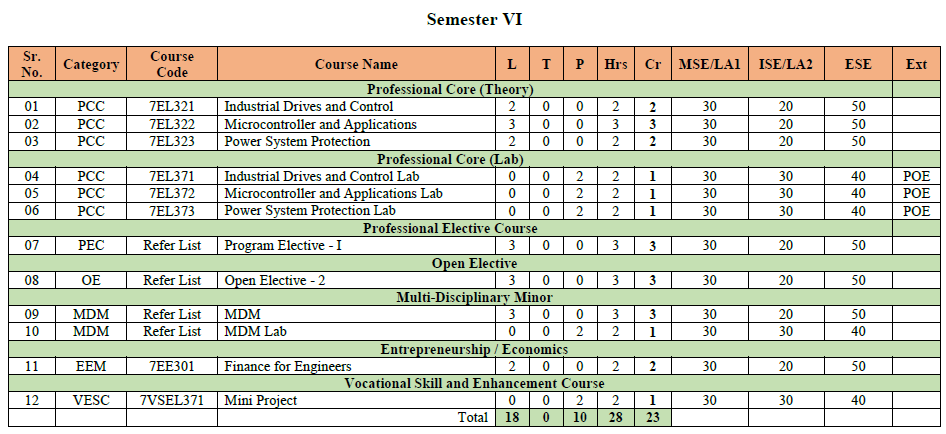
T.Y. B. Tech (Sem – VI)

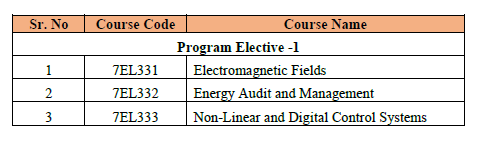
Professional Elective Course List for T.Y. B.Tech. (Electrical Engineering) Sem-VI A Y 2025-26

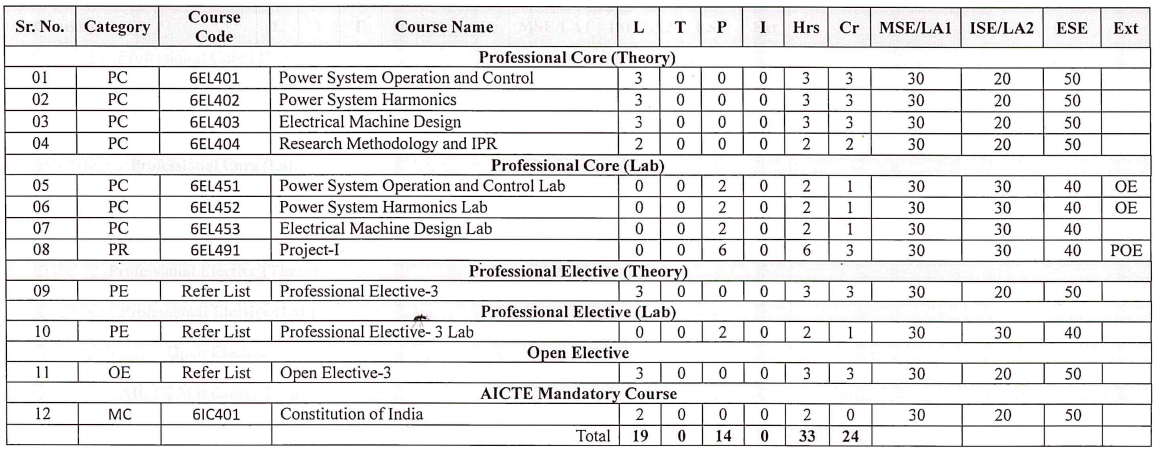
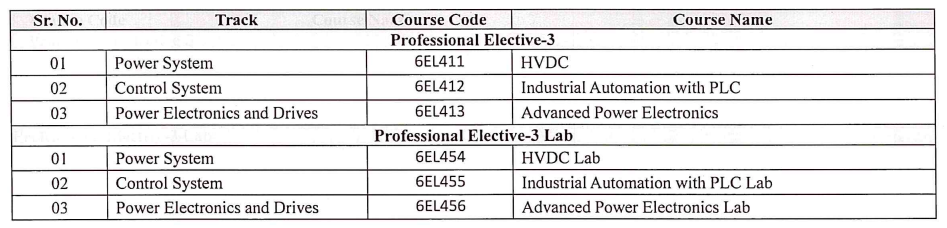
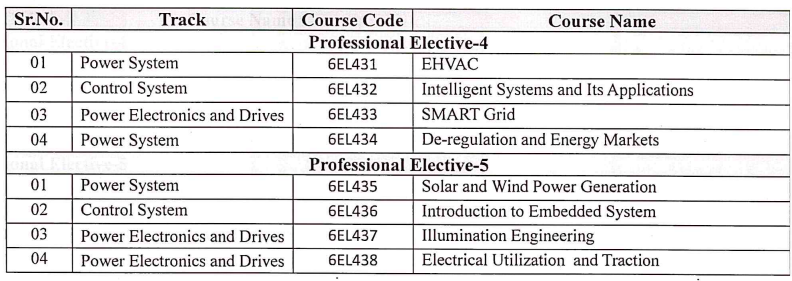
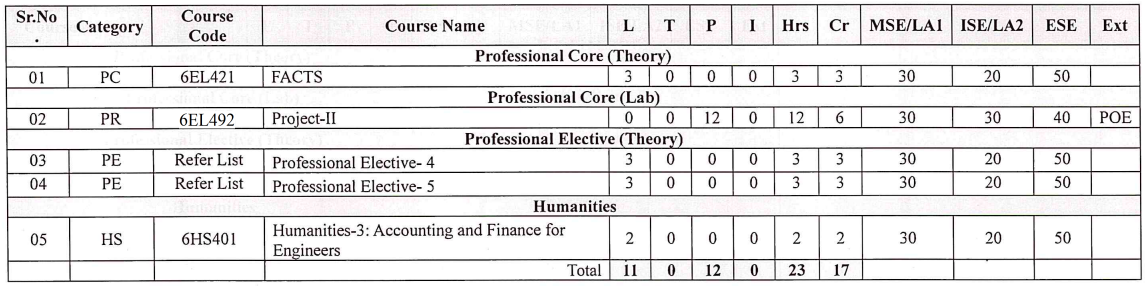
Credit system for final year B. Tech. Electrical Engineering Sem- VII and Sem- VIII Applicable for A. Y. 2024-25 and A.Y. 2025-26

Final Year B.Tech. (Sem – VII)


Final Year B.Tech. (Sem – VIII)


Links to the detailed syllabus:

Search