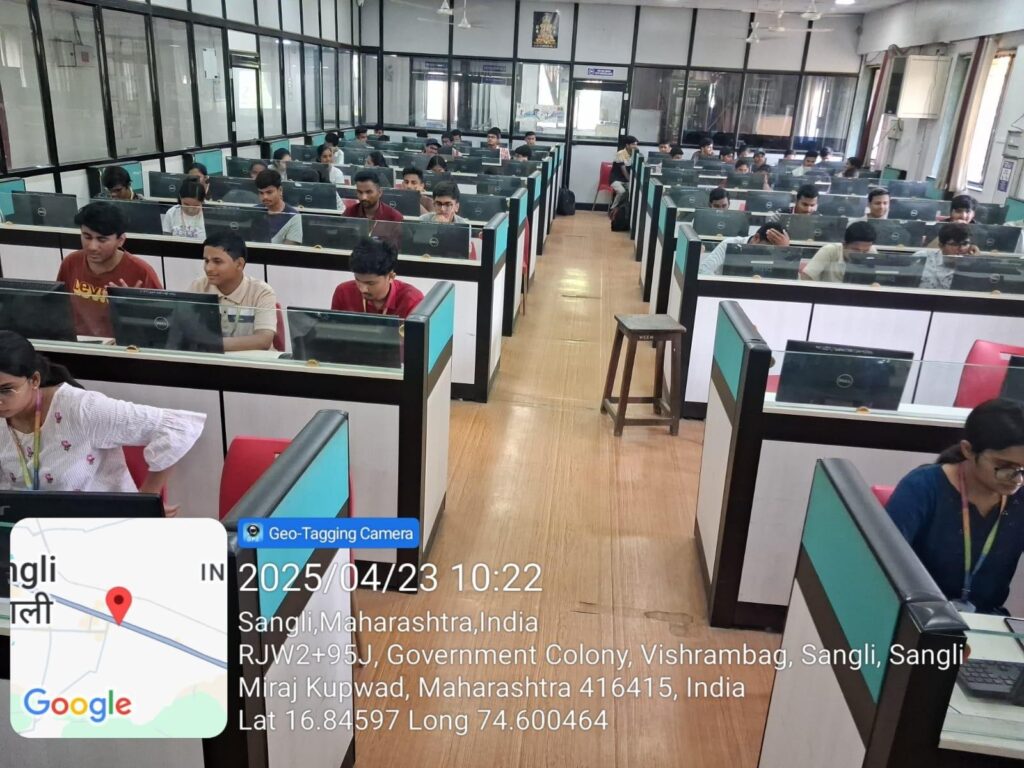
Curriculum – The B.Tech curriculum in Artificial Intelligence and Machine Learning is designed to provide students with a comprehensive education in Artificial Intelligence and Machine Learning.
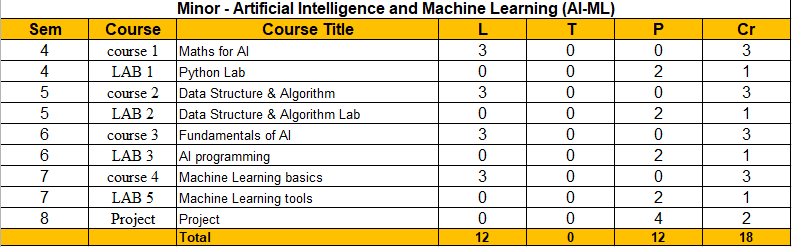
Curriculum – The B.Tech curriculum in Artificial Intelligence and Machine Learning is designed to provide students with a comprehensive education in Artificial Intelligence and Machine Learning. In the Academic Year 2024-2025 curriculum of First year and Academic Year 2025-2026 Second Year is implemented as per NEP 2020 policy which includes multidisciplinary minor (MDM) as well. AIML department offers MDM in Artificial Intelligence and Machine Learning (14 credits).
Minors – The department offers minors in areas such as artificial intelligence, Machine Learning,
Under-Graduate PEOs –
PEO1: Demonstrate Artificial Intelligence and Machine Learning knowledge to design an engineering solution.
PEO2: Exhibit communicative and professional skills with ethical human values for the use of Artificial Intelligence and Machine Learning.
PEO3: Develop an aptitude for reflective and continuous learning with emerging trends and technologies of Artificial Intelligence and Machine Learning.
PO1: Engineering Knowledge: Apply knowledge of mathematics, natural science, computing, engineering fundamentals and an engineering specialization as specified in WK1 to WK4 respectively to develop to the solution of complex engineering problems.
PO2: Problem Analysis: Identify, formulate, review research literature and analyze complex engineering problems reaching substantiated conclusions with consideration for sustainable development. (WK1 to WK4)
PO3: Design/Development of Solutions: Design creative solutions for complex engineering problems and design/develop systems/components/processes to meet identified needs with consideration for the public health and safety, whole-life cost, net zero carbon, culture, society and environment as required. (WK5)
PO4: Conduct Investigations of Complex Problems: Conduct investigations of complex engineering problems using research-based knowledge including design of experiments, modeling, analysis & interpretation of data to provide valid conclusions. (WK8).
PO5: Engineering Tool Usage: Create, select and apply appropriate techniques, resources and modern engineering & IT tools, including prediction and modeling recognizing their limitations to solve complex engineering problems. (WK2 and WK6)
PO6: The Engineer and The World: Analyze and evaluate societal and environmental aspects while solving complex engineering problems for its impact on sustainability with reference to economy, health, safety, legal framework, culture and environment. (WK1, WK5, and WK7).
PO7: Ethics: Apply ethical principles and commit to professional ethics, human values, diversity and inclusion; adhere to national & international laws. (WK9)
PO8: Individual and Collaborative Team work: Function effectively as an individual, and as a member or leader in diverse/multi-disciplinary teams.
PO9: Communication: Communicate effectively and inclusively within the engineering community and society at large, such as being able to comprehend and write effective reports and design documentation, make effective presentations considering cultural, language, and learning differences
PO10: Project Management and Finance: Apply knowledge and understanding of engineering management principles and economic decision-making and apply these to one’s own work, as a member and leader in a team, and to manage projects and in multidisciplinary environments.
PO11: Life-Long Learning: Recognize the need for, and have the preparation and ability for
i) Independent and life-long learning
ii) adaptability to new and emerging technologies
iii) critical thinking in the broadest context of technological change. (WK8)
Under-Graduate PSOs –
PSO1: Apply knowledge to synthesis, analyze and design algorithmic solutions in project development process
PSO2: Conceptualize knowledge to use advance AI ML techniques to analyze and design algorithms, solve problems
The Department of Artificial Intelligence and Machine Learning adopts an Outcome-Based Education (OBE) philosophy that emphasizes achieving clearly defined learning outcomes and continuous improvement in the teaching-learning process. This approach ensures that students not only acquire theoretical knowledge but also demonstrate measurable competencies aligned with industry, academia, and societal expectations.
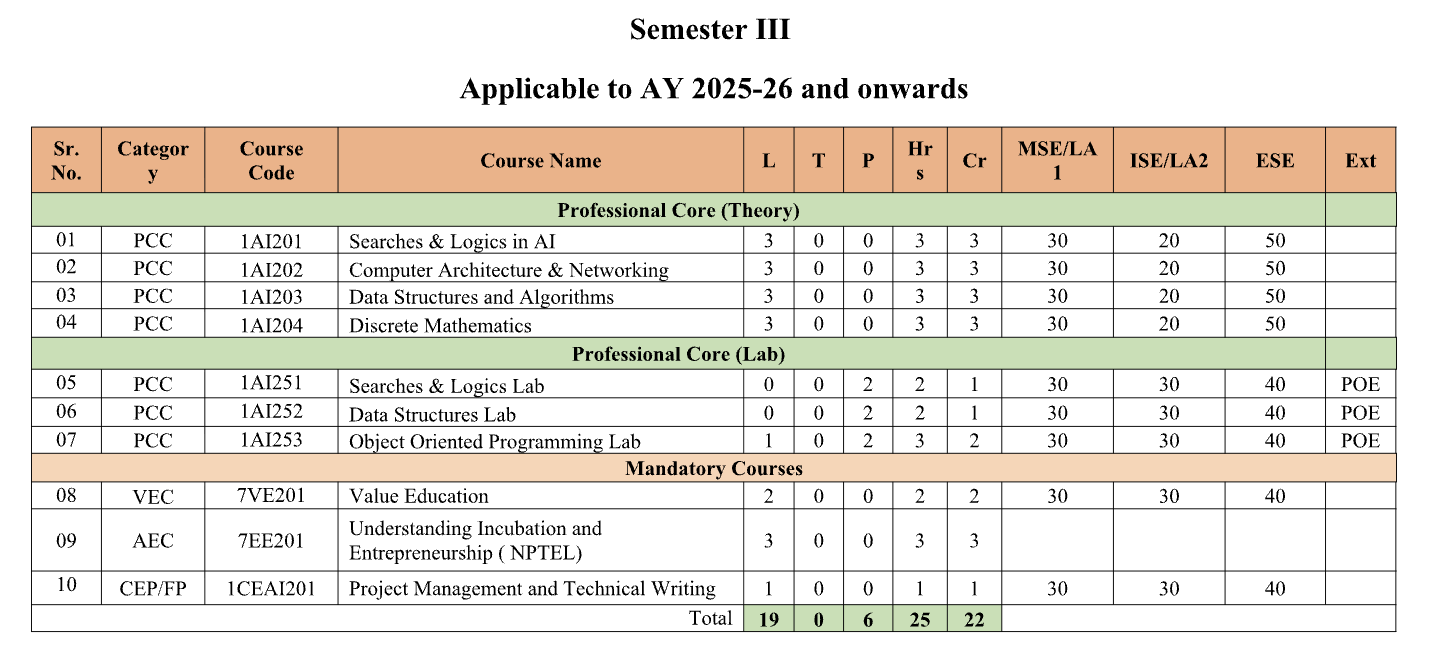
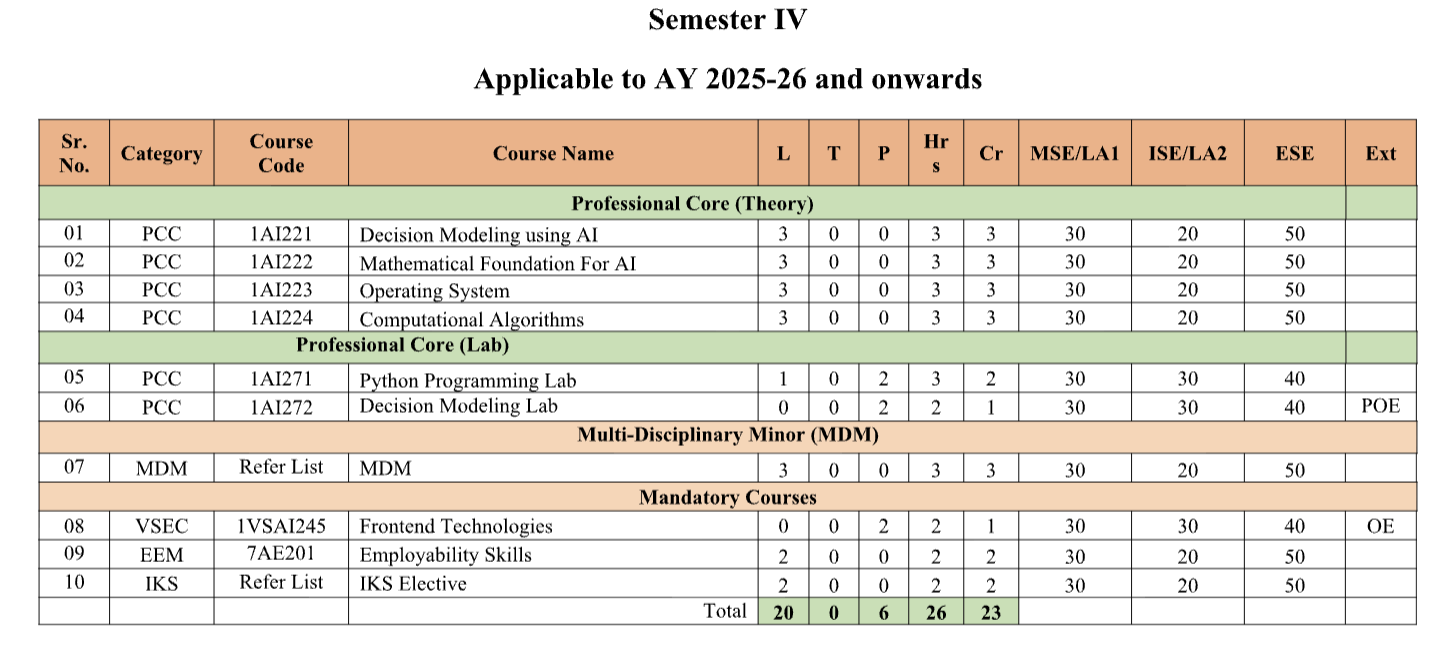
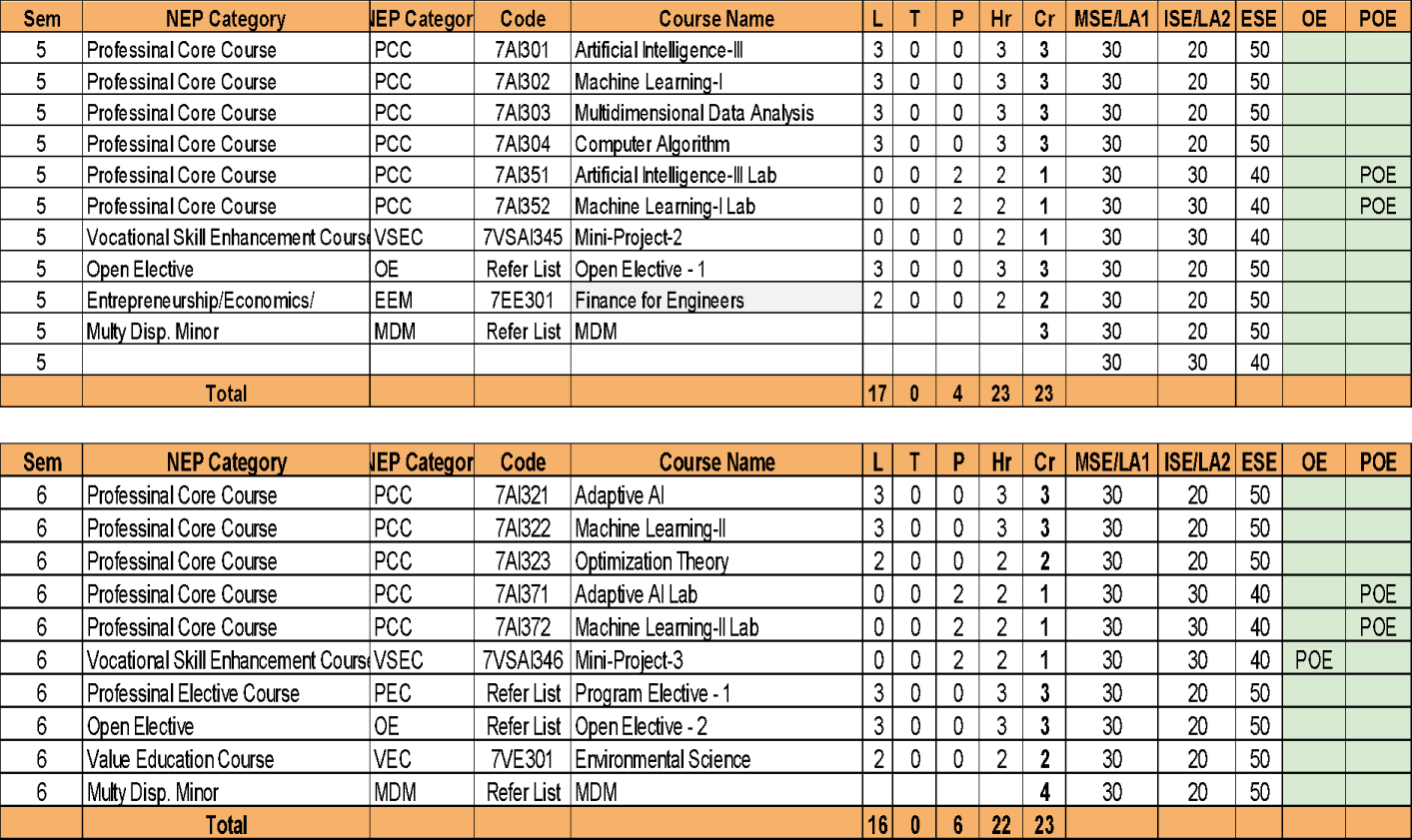
Tabular form of Program Structure ( Link to be provided for detailed note)
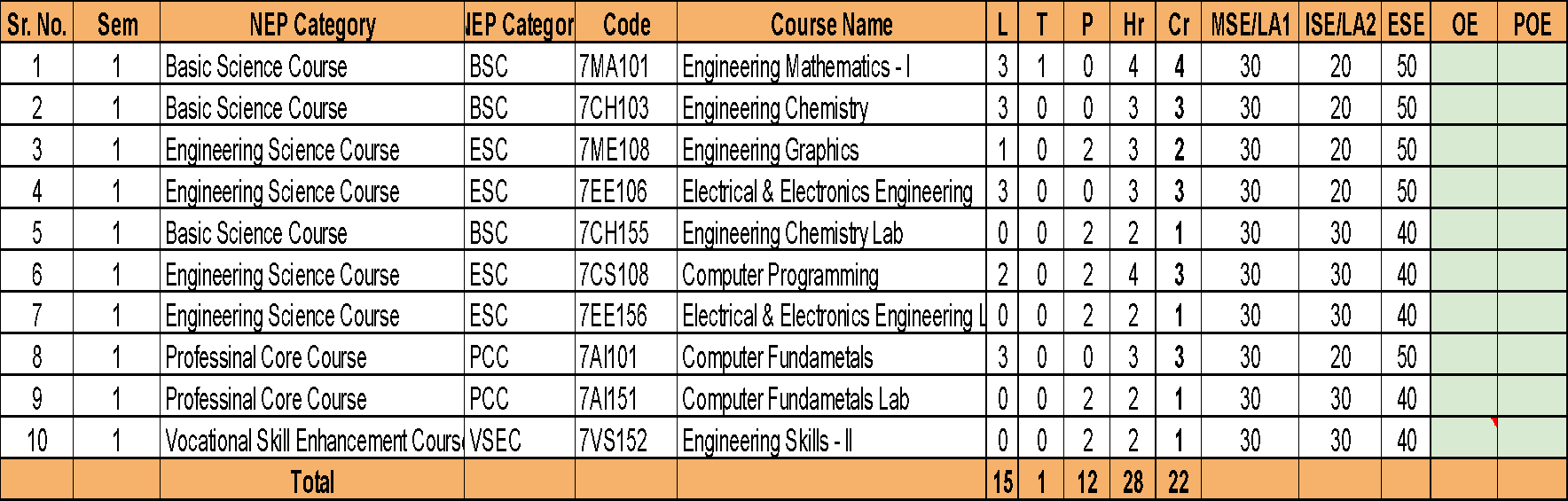
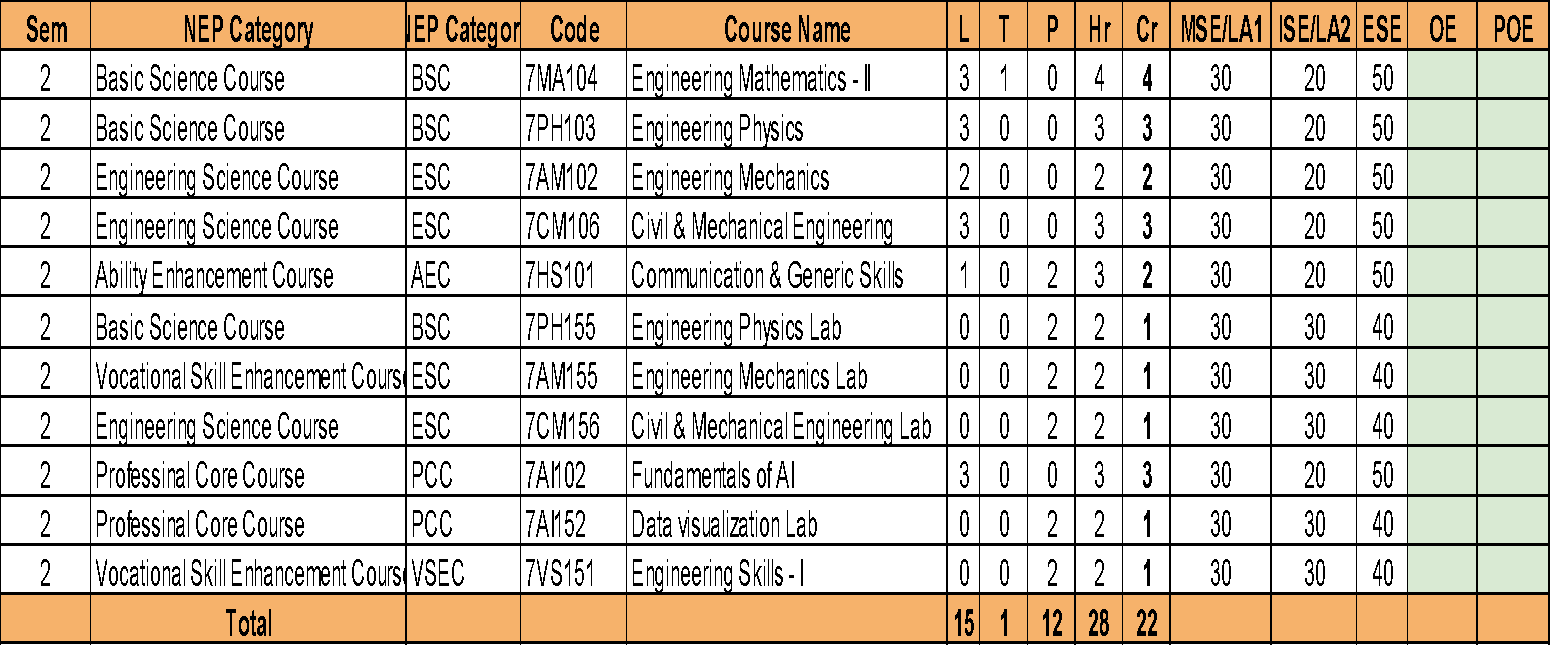

Links to the detailed syllabus: