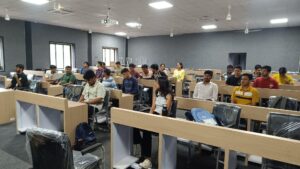
| Name of Lab | Details |
Networking and IoT Laboratory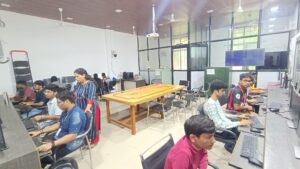 | The Network and IoT Laboratory is equipped with state-of-the-art infrastructure to support hands-on learning and research in networking and Internet of Things domains. The lab houses 21 high-performance Dell computer systems featuring Intel Core i7 processors, 16 GB RAM, 1 TB HDD, and 256 GB NVMe SSDs, all running on Windows 11 Pro, providing a robust platform for simulation, programming, and system configuration. Networking infrastructure includes two 24-port network switches (Extreme and TRENDnet), enabling practical exposure to LAN setup and network management. Additionally, the lab is supported by a VERTIV UPS with a 1 KVA capacity and 16 Exide SMF batteries to ensure uninterrupted power supply. For IoT development, the lab includes a comprehensive IoT kit comprising Raspberry Pi boards, various sensors, displays, and communication modules, facilitating prototype development and experimentation. The presence of a Samsung digital TV and a Hitachi LCD projector further aids in interactive teaching and demonstrations. |
Database Engineering Laboratory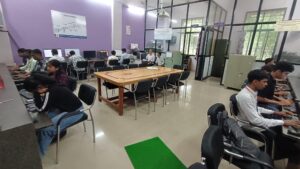 | The Database Engineering Laboratory is well-furnished with computing and peripheral infrastructure to support practical learning and project development in the areas of database design, management, and application development. It features 21 Dell computer systems with Intel Core i7-9700 CPUs, 16 GB RAM, 1 TB HDD, and 250 GB NVMe SSDs, delivering a reliable and high-speed computing environment, all running on Windows 11 Pro. An additional Dell system is dedicated for CCTV monitoring, configured with an Intel i7-2600 CPU and 4 GB RAM. For network connectivity, the lab is equipped with a 24+4 port D-Link Gigabit Smart Managed Switch and a 4U D-Link network rack, ensuring stable and scalable networking. The lab also includes a 3 KVA Powergun Alfa Online UPS with 8 Exide SMF batteries to provide uninterrupted power supply. Visualization and presentations are supported by an Epson EB-W49 LCD projector. Printing needs are met through an HP LaserJet 1020 and an Epson All-in-One L565 printer, facilitating documentation and report generation. This comprehensive setup supports a robust environment for conducting database-centric coursework, research, and development activities. |
Image Processing and Computer Vision Laboratory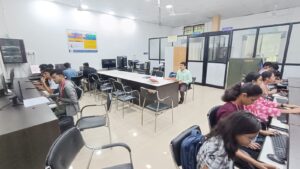 | The Image Processing and Computer Vision Laboratory is equipped with high-end hardware and specialized software to facilitate research and practical learning in digital image analysis, remote sensing, GIS, computer vision, and forensic computing. The lab houses 16 HP computer systems powered by Intel Core i7-13700 processors, 16 GB RAM, 1 TB HDD, and 256 GB NVMe SSDs, all running Windows 11 Pro with integrated Intel UHD graphics, offering a robust platform for high-resolution image processing and data-intensive tasks. A 28-port D-Link managed network switch ensures seamless data transfer and connectivity, while the VERTIV Powerbank 600 UPS with 16 Exide SMF batteries (12V, 120 AH) provides reliable power backup. The lab also includes an HP LaserJet M1005 MFP printer for documentation and an interactive smart board to enhance teaching and demonstrations. The lab is further enhanced with advanced software tools such as ERDAS Imagine Professional (5-user OEM licenses), IMAGINE Expansion Pack, and GeoMedia Professional for satellite image processing, geospatial analysis, and mapping applications. For forensic and cybersecurity applications, the lab includes Belkasoft Evidence Center X for digital evidence analysis, Passware Xit Forensic for password recovery and file decryption, and a vulnerability scanner tool for system security testing. Although currently inactive, EIGAP software (licensed for 50 users) is also part of the lab’s software inventory. This comprehensive setup makes the lab a vital center for academic exploration, industry-oriented training, and interdisciplinary research in image processing, GIS, computer vision, and digital forensics. |
Programming Laboratory
| The Programming Laboratory is designed to support foundational and advanced programming courses, catering to First Year (FY), Second Year (SY), and Third Year (TY) students. Spread across 91.94 sq. m. with a seating capacity for 20 students, the lab is equipped with 20 Dell computer systems powered by Intel Core i7-8700 CPUs @ 3.20GHz, 4 GB RAM, 1 TB HDD, and 256 GB NVMe SSDs, running Windows 11 Home. These systems provide a capable environment for learning and practicing programming across various languages and platforms. The lab has essential software tools installed, including MS Office 2013, C, C++, Java, Python, Jupyter, and Visual Studio, ensuring a comprehensive development and debugging environment. Additionally, a CodeZinger subscription for 475 users enhances coding practice through auto-evaluated programming challenges. The lab supports a utilization of 870 student-hours per semester across all academic wings, reflecting its critical role in curriculum delivery. The Programming Lab stands as a core facility for nurturing programming skills and software development competencies. |
Advanced Software Engineering Lab
| The Advanced Software Engineering Laboratory is a high-capacity, well-equipped facility designed to support project-based learning and development in software engineering and enterprise applications. Spanning an area of 81.94 sq. m. with a seating capacity for 50 students, the lab is equipped with 50 Dell computer systems powered by Intel Core i7-8700 CPUs @ 3.20GHz, 4 GB RAM, 1 TB HDD, and 256 GB NVMe SSDs, all running on Windows 11 Home. The lab supports comprehensive software development environments with essential tools such as MS Office 2013, Oracle, SQL Developer, GitHub, Jira, and Microsoft 365 A3 subscription, enabling students to engage in end-to-end software project lifecycle activities. Visual and instructional support is provided via an Epson EB-945H LCD projector, while lab security is maintained with CCTV surveillance. A robust network infrastructure is established through six high-performance switches including models from TRENDnet, Netgear, and Extreme Networks. Continuous power backup is ensured by a 20 KVA Emerson GXT MT Online UPS supported by 20 Turbon SMF batteries (12V, 180 AH). Additionally, an Ahuja SSB-80M amplifier supports communication needs during sessions. The lab supports FY, SY, and TY students, with a utilization rate of 600 student-hours per semester. This lab plays a pivotal role in delivering advanced software engineering education through practical and collaborative learning. |
Artificial Intelligence and Machine Learning Laboratory
| The Artificial Intelligence and Machine Learning Laboratory is a dedicated facility designed to support AI/ML-centric education, research, and development activities. The lab features a heterogeneous set of 22 computer systems from HP and Dell, equipped with a range of processors including Intel Core i5-6550, i5-3470, i7-4700, i7-2600, and powerful Intel Xeon E3-1220 CPUs. These systems are configured with RAM capacities ranging from 4 GB to 16 GB and 1 TB HDD storage, offering a flexible environment suitable for running AI algorithms, machine learning models, and data processing tasks. The lab also includes a ViewSonic LCD projector (Model RLC 129) to facilitate interactive teaching and presentations. For effective communication during lab sessions or workshops, a 240W amplifier with mixer, Bluetooth, and USB support is available. This setup provides students with essential computational resources and instructional tools for exploring real-world AI and machine learning applications, ranging from predictive analytics to neural networks and data visualization. |
Innovation and Project Laboratory
| The Innovation and Project Laboratory is a cutting-edge facility designed to nurture creativity, research, and interdisciplinary project development in fields such as robotics, drones, embedded systems, AI, and aeromodelling. The lab provides a rich ecosystem of prototyping tools and devices to support student innovations. Core resources include 3 standards and 3 carbon fiber hexacopter drone frames, 6 Pixhawk flight controllers, 6 FS-i6X (and above) RC controllers, 30 ESC 30A units, 30 propellers (10×5), 30 brushless motors, and 2 high-speed 2200KV motors. Power requirements are addressed with 6 LiPo batteries (2500 mAh), 6 LiPo batteries (1000 mAh), and a fast battery charger. Additionally, a DJI Tello drone with an extra battery, a telemetry kit, landing gear, and soldering tools are available to streamline the development and testing process. For robotic and autonomous systems, the lab features a Dobot Magician Robotic Arm, Turtle Bot, and Jetson Nano Developer Kit, enabling students to build and test intelligent automation solutions. Advanced perception and navigation capabilities are supported by Intel RealSense Depth Cameras (3 units), YD Lidar G2, RP Lidar A3, and a RTK Module (Receiver and Transmitter) for high-accuracy positioning. Moreover, a Snapmaker 3-in-1 CNC machine is available for multifunctional prototyping, combining 3D printing, laser engraving, and CNC carving. The lab also supports aeromodelling with 2 RC plane frames and 24 servo motors. This extensive infrastructure encourages experiential learning and supports capstone projects, robotics competitions, and applied research across multiple domains, making the Innovation and Project Lab a hub of technological exploration and invention. |
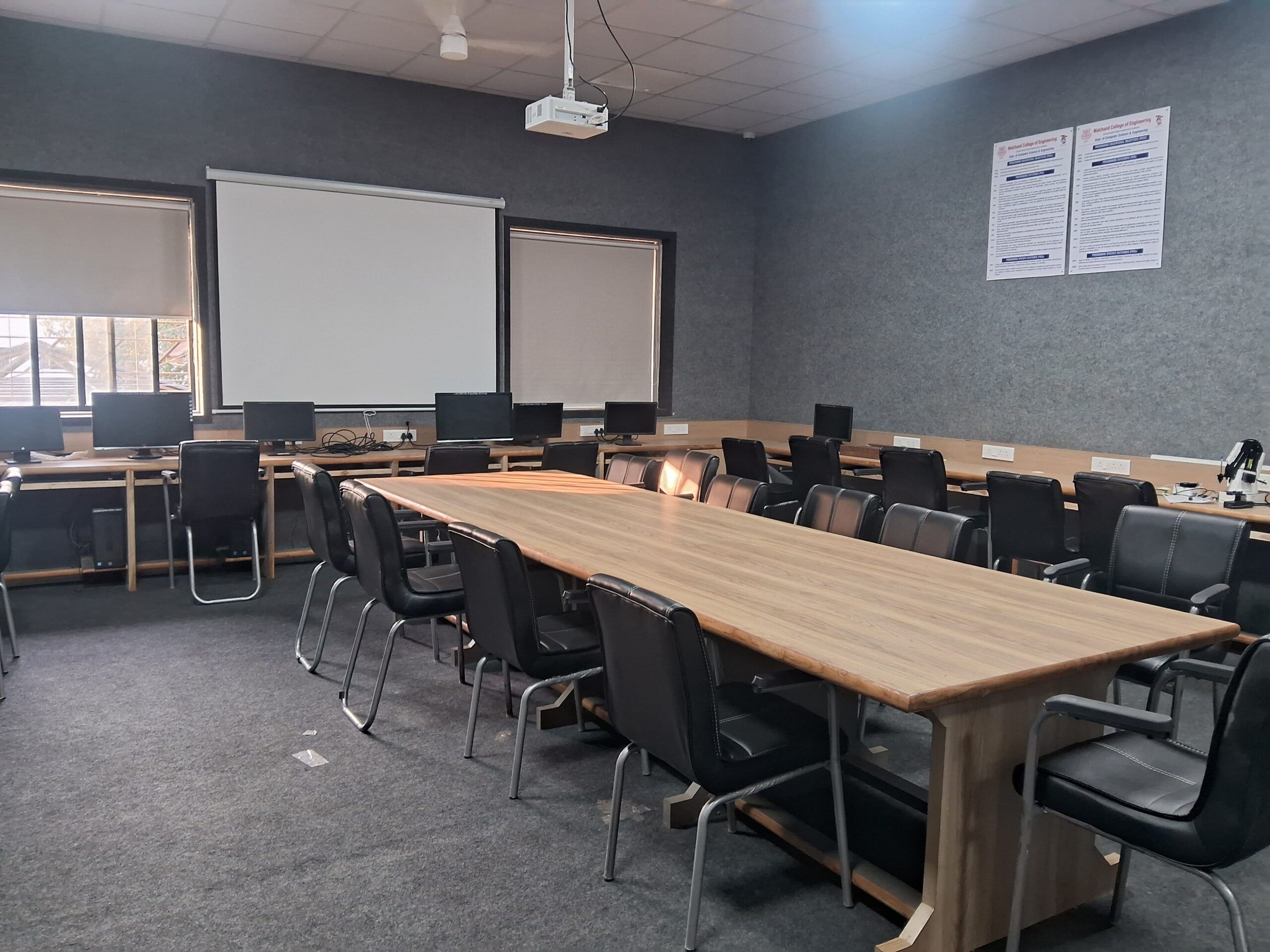
PG Research Laboratory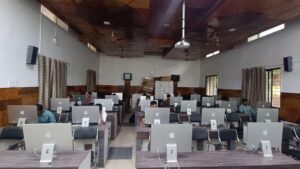 | The Postgraduate (PG) Research Laboratory is a high-performance computing and research facility established to support advanced postgraduate studies, simulations, and innovation-driven research across domains such as data science, AI, cybersecurity, and high-end graphics computing. The lab houses 10 powerful HP computer systems, each equipped with Intel Core i7-13700 processors @ 2.10GHz, 16 GB RAM, 1 TB HDD, 500 GB NVMe SSD, and NVIDIA GeForce RTX 3060 graphics, providing the required computing power for deep learning, visualization, and parallel processing tasks. These systems run on Windows 11 Pro, offering a modern and secure operating environment. For seamless networking and high-speed data transfer, the lab is supported by enterprise-grade switches including the Extreme X440 G2 24t-10GE4 and Extreme 5320-24T-8XE, ensuring reliable and scalable connectivity. An Epson EB-X14 LCD projector enhances presentations and research discussions, while an Epson L565 All-in-One printer supports documentation and report generation needs. Power continuity is ensured by a 6KVA Vertiv UPS supported by 16 SMF batteries, minimizing interruptions during critical research work. This advanced infrastructure makes the PG Research Lab a dynamic hub for scholarly research, technical innovation, and collaborative academic exploration at the postgraduate level. |
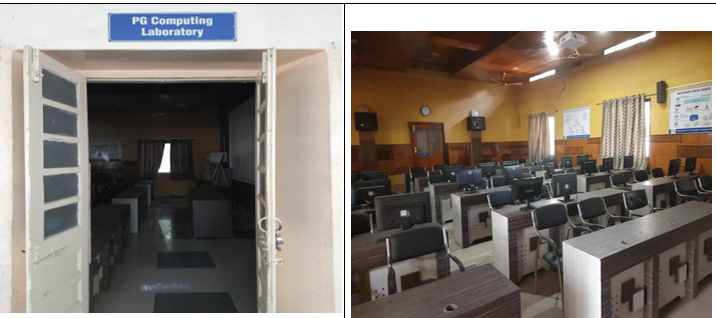
PG Computing Laboratory 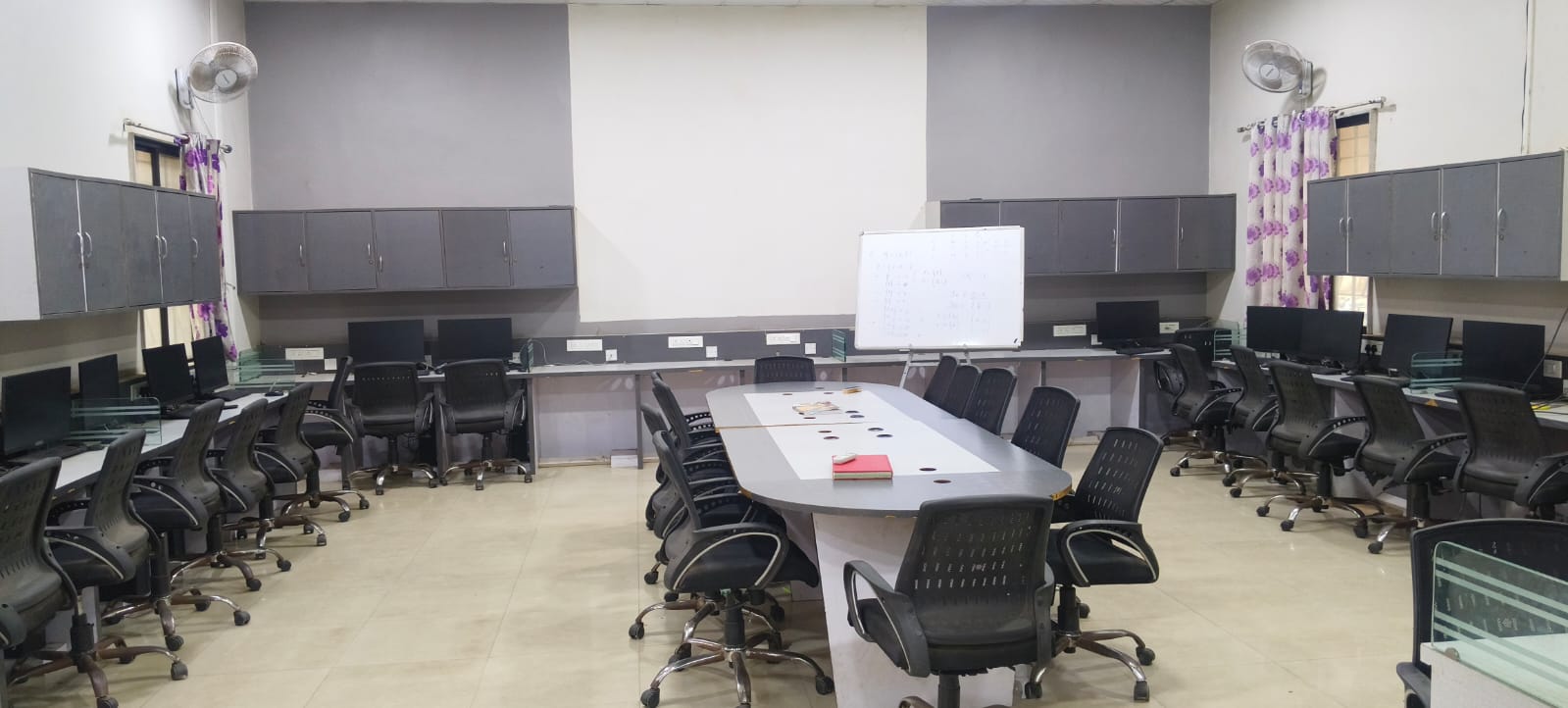 | The Postgraduate (PG) Computing Laboratory is a dedicated facility aimed at supporting advanced coursework, research, and development activities in computing-intensive domains. The lab is equipped with a total of 10 HP computer systems featuring the latest Intel Core i7-13700 processors @ 2.10GHz, 16 GB RAM, 1 TB HDD, and 500 GB NVMe SSDs, ensuring high-speed performance and responsiveness. Of these, 6 systems are equipped with **NVIDIA GeForce RTX 3060** graphics cards, ideal for tasks involving deep learning, data visualization, simulations, and parallel computing, while the remaining 4 systems come with **Intel UHD Graphics**, suitable for general-purpose computing and programming. All systems operate on **Windows 11 Pro**, providing a secure and modern computing environment. With its high-performance infrastructure, the PG Computing Lab facilitates academic research, project implementation, and exploration of advanced computing technologies for postgraduate students and scholars. |